Skip to content
Citrus Tour Safaris
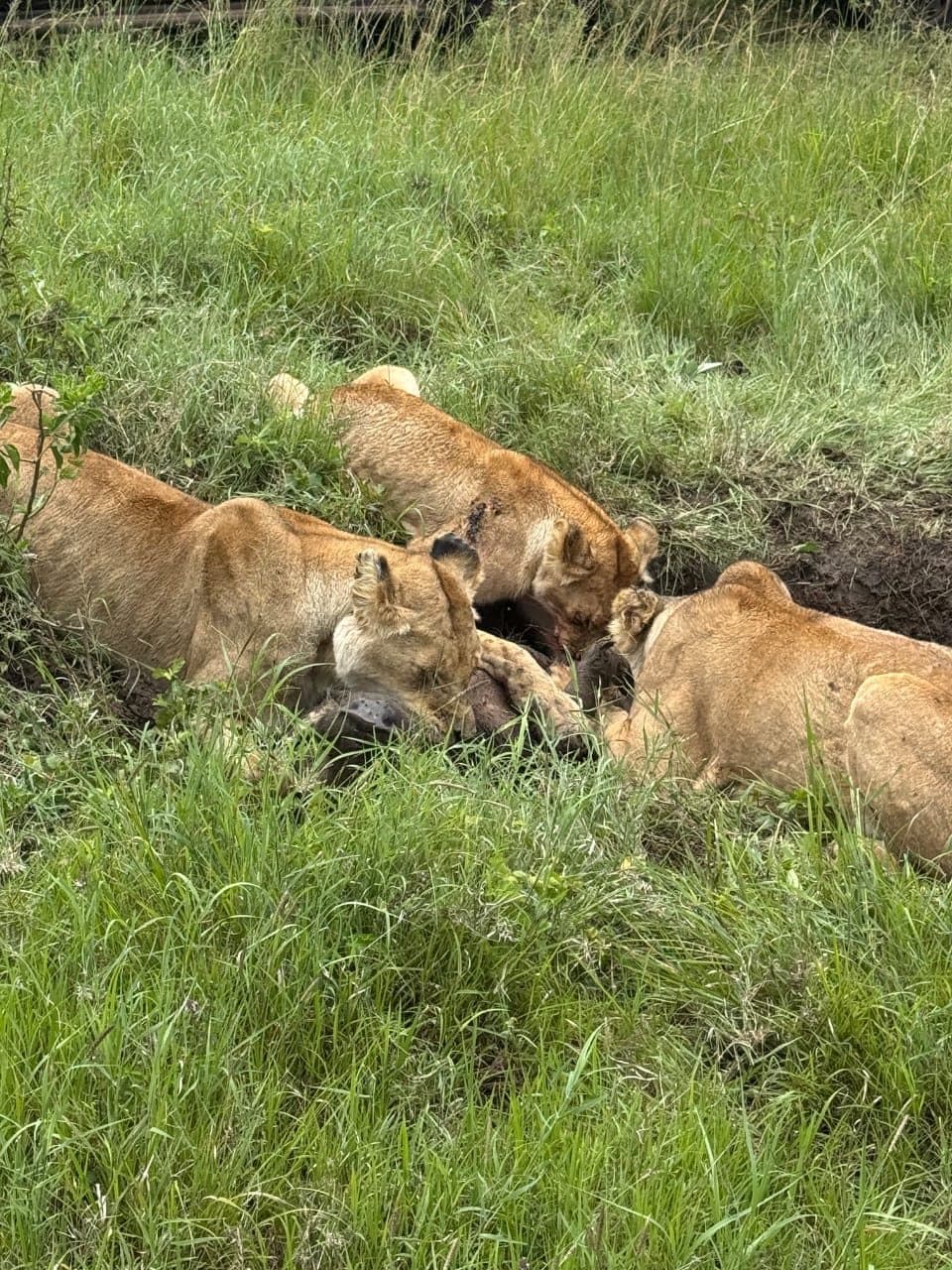
Lions resting in long golden grass
Mid-range13 days · 12 nightsKenya & Tanzania

13 Days Magical Kenya & Tanzania — Mid-range

A 13-day circuit taking in Maasai Mara, Lake Nakuru and Lake Naivasha, staying in comfortable tented camps and established safari lodges throughout. 12 nights on safari, priced on request.

Mara - Nakuru - Naivasha - Amboseli - Arusha - Manyara - Ngorongoro - Serengeti - Tarangire

About this safari

The route opens in Maasai Mara — big cats, open plains and the northern stage of the Great Migration — and works through 7 further destinations over 13 days. It crosses between Kenya and Tanzania; the final proposal will explain the border arrangements, vehicles and guiding. Accommodation is at the mid-range standard: comfortable tented camps and established safari lodges. The balance most travellers settle on — proper beds, en-suite bathrooms and well-run lodges in good positions, without the premium that the top end of the market commands. Like every safari in this catalogue, it is priced on request rather than sold at a published rate, because park fees, permits, group size and contracted accommodation all change the figure.

Highlights

  • Maasai Mara: exceptional predator density, with large lion prides, resident leopard along the river courses and cheetah on the open grassland.
  • Lake Nakuru: one of the most reliable places in Kenya to see white rhino, with black rhino also present in good numbers.
  • Lake Naivasha: a boat trip brings you genuinely close to hippo pods and fish eagles, which is a different experience from viewing wildlife through a vehicle window.
  • Amboseli: large, relaxed elephant families, including some of the biggest surviving tuskers in Africa, moving between the swamps and the dry plains.
  • Lake Manyara: tree-climbing lion, unusual behaviour seen in only a handful of places in Africa.
  • Ngorongoro: the highest permanent density of large mammals anywhere in Africa, all within a contained caldera.
  • Serengeti: the Great Migration, the largest terrestrial mammal movement on earth, is resident here for most of the year.

Day by day

Your 13-day itinerary

Written out in full before you book, so you can see exactly how the days are paced and where each night is spent.

  1. Day 1

    Nairobi to Maasai Mara

    The route is drafted from Nairobi. Citrus will set out the actual meeting arrangements and first transfer in writing. The drive to the Mara is part of the experience rather than a transfer to be endured. You cross the Rift escarpment, pass through market towns where the day's business spills onto the roadside, and then watch the landscape empty out into grassland. By the time the plains open up properly, wildlife is already visible from the vehicle and the pace of the trip has changed. With a whole day in the reserve there is time to go further than the popular circuits. Your guide can push towards quieter sectors where vehicle numbers thin out and sightings are shared with nobody, returning through the afternoon as the light softens. The middle of the day is often spent with a packed lunch under a tree near the river, watching hippo shift and resettle in the shallows. The catalogue suggests a comfortable mid-range stay here. The exact lodge, room basis and meals are confirmed in the quotation.

    Overnight: Maasai Mara

    Vast herds of wildebeest and zebra spread across open grassland
  2. Day 2

    A full day in Maasai Mara

    Today is given over to the reserve, and how it unfolds depends on what your guide finds. Radio traffic between vehicles helps, but the best mornings often come from reading tracks and working a hunch. Lion are the most reliably seen of the big cats here; cheetah favour the open ground where they can use speed; and leopard, though present in good numbers along the watercourses, still ask for patience and a bit of luck. A full day here usually divides itself naturally. The first hours go to the predators, tracking the prides your guide knows by territory and following whatever the night has left behind. Through the middle of the day the vehicle heads for shade near the river, where hippo crowd the deeper pools and crocodile lie out on the banks. The last light brings the plains alive again, with hunting cats moving and dust rising gold behind the herds. A mid-range camp or lodge is proposed for this night, subject to availability and written confirmation.

    Overnight: Maasai Mara

    Vast herds of wildebeest and zebra spread across open grassland
  3. Day 3

    Maasai Mara to Lake Nakuru

    The next leg links the two destinations, leaving the grasslands behind, the day's driving heads for the Rift Valley floor and the compact park that surrounds Lake Nakuru. It is a shorter transfer than most on a Kenyan circuit, which leaves useful time for an afternoon game drive before the light goes — and the afternoon is when rhino most often move out onto the open lakeside flats. A morning here has a different character from the open savannah parks — tighter, greener, more enclosed. Your guide will work the lakeside tracks first while rhino are still out grazing, then climb through the woodland where colobus move in the canopy and the view opens out over the whole basin from the cliff viewpoints. This outline assumes a comfortable safari stay near the route. The named property remains a suggestion until quoted.

    Overnight: Lake Nakuru

    Zebras grazing on open grassland
  4. Day 4

    Optional: on to Lake Naivasha and a boat on the lake

    If this optional activity is included in your written quotation, a boat trip on the lake is the reason most itineraries stop here. Cutting the engine near a hippo pod brings you closer to these animals than any vehicle can, and the birdlife along the shoreline is extraordinary — fish eagle calling from the dead trees, pelican working the shallows in line, cormorant colonies packed onto drowned branches, and herons stalking the papyrus edge. Boat trips are normally an optional extra rather than an automatic inclusion. The itinerary continues by road, the road south from Nakuru runs along the Rift Valley floor with the escarpment rising on both sides, and Naivasha announces itself as a band of green — fever tree forest and flower farms crowding down to the only freshwater lake in the chain. The change from soda lake to fresh water is immediately visible in the vegetation and in the birds working the papyrus fringe. The suggested standard is mid-range. Citrus will confirm the property and contracted services in writing before booking.

    Overnight: Lake Naivasha

    The red cliffs and open track of Hell's Gate National Park near Lake Naivasha
  5. Day 5

    Lake Naivasha to Amboseli

    Leaving the previous stop behind, today's drive crosses the dry Kajiado rangelands where Maasai herders move cattle across open country and dust devils spin up off the flats. It is hot, bright driving, and it sets up the contrast that defines Amboseli — a parched landscape holding permanent water at its centre, with Africa's highest mountain filling the southern horizon whenever the cloud lifts. A full day here divides between the permanent swamps, which hold water all year and concentrate game reliably, and the open plains where zebra, wildebeest, giraffe and gazelle spread out. Lion, cheetah and spotted hyena are present, though at lower densities than the Mara and requiring more patience. A short climb up Observation Hill gives the only elevated view in the park and makes sense of how the swamps sit in the landscape. The catalogue suggests a comfortable mid-range stay here. The exact lodge, room basis and meals are confirmed in the quotation.

    Overnight: Amboseli

    Elephants silhouetted against a low sun
  6. Day 6

    A full day in Amboseli

    Amboseli's elephants are the most closely studied in the world, monitored continuously since 1972, and the families here are relaxed around vehicles in a way that makes for exceptional viewing. Drives follow them between the swamps, where they feed belly-deep in water with cattle egret riding their backs, and the open plains they cross in long processions. Among them are some of the last genuinely big-tusked bulls left in East Africa. The open, almost treeless terrain gives Amboseli long sightlines and makes it one of the best photographic parks in Kenya. Morning drives work the swamp edges where elephant, buffalo and hippo gather, while the dry lake bed shimmers and distorts in the heat further out. If the cloud lifts off Kilimanjaro — most likely in the first and last hour of daylight — the mountain dominates everything. The catalogue suggests a comfortable mid-range stay here. The exact lodge, room basis and meals are confirmed in the quotation.

    Overnight: Amboseli

    Elephants silhouetted against a low sun
  7. Day 7

    Crossing into Tanzania — Amboseli to Arusha

    The route then continues onward, the road to Arusha runs beneath the bulk of Mount Meru, Tanzania's second highest mountain, through country that grows steadily greener as it climbs. Arusha is the operational heart of the northern circuit — vehicles are prepared here, guides are briefed here, and almost every Serengeti and Ngorongoro itinerary passes through it. Arusha is a working town rather than a destination, and the day is usually about logistics done well — a full briefing on the days ahead, checking the vehicle and equipment, and an early night before the circuit begins. The coffee estates on the lower slopes of Mount Meru welcome visitors, and nearby Arusha National Park offers colobus, giraffe and flamingo on the Momella Lakes for anyone with a spare half day. This outline assumes a comfortable safari stay near the route. The named property remains a suggestion until quoted.

    Overnight: Arusha

    A comfortable lodge bedroom
  8. Day 8

    Arusha to Lake Manyara

    This travel day carries the route onward, the road from Arusha runs west towards the Rift escarpment, which rises abruptly out of the plain ahead of you, and Lake Manyara occupies the narrow strip between that wall and the alkaline lake below. The park is compressed into a few kilometres of width, and the habitat changes band by band as you drive — groundwater forest, acacia woodland, floodplain, lake. The park's baboon troops are among the largest recorded anywhere, and watching a few hundred of them work through the forest floor is a spectacle in its own right. Elephant move through the trees with surprising quietness, hippo hold the pools near the lake, and the alkaline shallows draw flamingo and pelican in numbers that vary with the water level. The suggested standard is mid-range. Citrus will confirm the property and contracted services in writing before booking.

    Overnight: Lake Manyara

    Zebras grazing on open grassland
  9. Day 9

    Lake Manyara to Ngorongoro

    The next leg links the two destinations, today's route brings you up into the Ngorongoro highlands, where the temperature drops with the altitude and cloud sits in the forest along the rim. The conservation area is shared with Maasai pastoralists, and you will pass cattle and manyattas on the way — it is one of the few places where people and wildlife share protected land by design. The crater floor holds roughly 25,000 large animals in an area small enough to cover in a morning, and because most of them have no reason to leave, the viewing does not depend on season. Lion prides are large and well known, spotted hyena are abundant, and the Lerai fever tree forest holds some of the last big-tusked bull elephants in Tanzania. The catalogue suggests a comfortable mid-range stay here. The exact lodge, room basis and meals are confirmed in the quotation.

    Overnight: Ngorongoro

    Zebras grazing on open grassland
  10. Day 10

    Optional: ngorongoro Crater descent, on to Serengeti

    This activity is a planning option and only forms part of the day when it appears in the written quotation. The itinerary continues by road, moving deeper into the Serengeti, the country shifts between short-grass plain, acacia woodland and granite kopjes rising out of the grass like islands. Your guide will use the drive itself as a game drive, and in the central Seronera area — productive year-round for resident wildlife — the sightings usually start coming quickly. A mid-range camp or lodge is proposed for this night, subject to availability and written confirmation.

    Overnight: Serengeti

    A rhino grazing in open grassland
  11. Day 11

    A full day in Serengeti

    The Serengeti holds one of the densest lion populations on earth, and the granite kopjes are the best place to look — prides use them for shade, vantage and shelter, and a pride draped across warm rock in early light is one of the defining images of the park. Cheetah favour the open plains where their speed counts, and leopard rest through the heat in the acacias along the Seronera river courses. Between the large predators there is a great deal else. Bat-eared fox and serval hunt the short grass, secretary birds stride through it, and agama lizards blaze orange and blue on the kopjes. Your guide will stop as readily for a serval hunting in long grass as for a lion, and on a good day that is exactly the right call. This outline assumes a comfortable safari stay near the route. The named property remains a suggestion until quoted.

    Overnight: Serengeti

    Vast herds of wildebeest and zebra spread across open grassland
  12. Day 12

    Serengeti to Tarangire

    The next section of the circuit moves on, the road south-west from Arusha runs through Maasai grazing land before turning into Tarangire, and the change at the gate is immediate: baobabs. They stand alone across the open woodland, enormous and strange, and they give the park a landscape that exists nowhere else on the northern circuit. In the dry season the first elephants usually appear within minutes. The park's character comes from its trees. Baobabs — some of them well over a thousand years old, several scarred where elephants have stripped the bark for moisture — dominate the open woodland, and the late-afternoon light through them is the signature photograph of any northern circuit trip. Lion are common here and occasionally rest in the branches, as they do at Lake Manyara. The suggested standard is mid-range. Citrus will confirm the property and contracted services in writing before booking.

    Overnight: Tarangire

    An elephant herd moving across open savannah
  13. Day 13

    Tarangire to Nairobi

    The last morning remains flexible until the departure point and timing are agreed. Tarangire is noticeably quieter than the Serengeti or the Crater, and that shows in the pace of a drive. Sightings are rarely crowded, your guide can take time over them, and the mix of open woodland and river valley means the terrain changes constantly. Buffalo, giraffe, zebra, wildebeest, impala and waterbuck are all common along the way. Arusha marks a clear hinge in the journey, and the evening is generally given over to a proper meal and an early night. The mountain stands behind the town, the air is cooler than on the plains, and the briefing for the circuit ahead covers routes, park fees, timings and what to expect at each stop. Nairobi is the working end point, with the final transfer stated in the written proposal.

    Safari ends

    Elephants gathered at a waterhole

Where you stay

Suggested accommodation

Accommodation below is the suggested standard for this package, taken from the Citrus catalogue. Where an entry describes a standard rather than a named property, we confirm the exact camp or lodge with your quotation. Named properties are suggestions and are substituted with comparable alternatives if they are unavailable for your dates.

Source catalogue listing

Masai Mara Sopa + Sarova Lion Hill + Lake Naivasha Sopa + Kibo + Mount Meru + Manyara Serena + Ngorongoro Serena + Kubu Kubu + Tarangire Sopa

This is reproduced exactly from the catalogue. The written quotation will allocate nights and confirm each available property before booking.
Typical safari arrangements may include

These are planning examples, not confirmed inclusions for this package. Your written quotation will confirm exactly what is included.

  • A private or shared safari vehicle may be proposed, depending on the route and quotation
  • Guiding, transfers and game drives may be included where they are itemised in the written quotation
  • Park, reserve and permit costs may be included or quoted separately; the quotation will say which
  • Accommodation may be quoted at the suggested standard or at an agreed alternative
  • Meals, drinking water and taxes vary by supplier and will be itemised or described in the quotation

Costs that may be separate

The quotation will identify every separate cost before you confirm.

  • International or domestic flights and airport charges may be separate
  • Visas, travel insurance and health requirements are normally the traveller's responsibility
  • Gorilla and chimpanzee permits may be included or billed separately
  • Optional activities, drinks, tips, laundry and personal purchases may be separate
  • Any cost not addressed by the draft itinerary should be checked before the booking is confirmed
  • Optional extras on this route: balloon safari and Maasai community visits; a lake boat trip, a walking visit or cycling at Hell's Gate; a community visit arranged with a local partner; a canopy walkway or night drive where available; a balloon safari where available

Important notes

  • Accommodation shown is suggested rather than contracted. The exact property is confirmed in your written quotation and may change with availability.
  • Wildlife sightings, migration movements, river crossings and clear mountain views depend on season, weather and chance and cannot be guaranteed.
  • Activities described as optional are excluded unless the written quotation expressly includes them.
  • The day-by-day text is a planning outline derived from the catalogue route. Your quotation will confirm exact transfers, activities, meals, permits and accommodation.

Before you ask

Planning questions for this route

What does price on request mean for this safari?

The catalogue sets the route and travel standard, but it does not publish a fixed price or a contracted inclusion list. Citrus will prepare a written quotation for your dates, party and rooming, showing the exact transfers, activities, accommodation, meals, fees and permits before you confirm.

Is the listed accommodation guaranteed?

No. It is suggested accommodation from the source catalogue. Availability and any proposed alternative are confirmed in the written quotation before a booking is made.

Is a clear view of Mount Kilimanjaro guaranteed?

No. Cloud and weather can obscure the mountain even when a route is timed well.

Can the pace of this longer route be changed?

Ask Citrus to revise it. Any change to route, nights or transport must be reflected in the final itinerary and quotation.

Ready when you are

Let’s shape this safari around you

Tell us your dates and who is travelling, and we will come back with availability, honest advice on timing and a written quotation for this route.

WhatsApp
WhatsApp