Planning guide · 7 min read
Kenya or Tanzania: how to choose
They share an ecosystem and a border, and the wildlife is largely the same. The differences that actually matter are cost, distance, crowding and what you want a day to feel like.
By the Citrus Tour Safaris team
The wildlife is not the deciding factor
The Maasai Mara and the Serengeti are the same ecosystem divided by an international border, and the animals cross it without noticing. Both countries hold all of the Big Five, both have outstanding big-cat viewing, and both carry the migration for part of the year. If you are choosing between them on the basis of which has better wildlife, you are using the wrong criterion.
Cost
Tanzania is meaningfully more expensive. Park fees are higher, the Ngorongoro Crater carries a separate and substantial descent fee per vehicle, and the distances involved push more itineraries towards internal flights. Kenya's park fees are lower and its road network between the main reserves is better, which keeps budget and mid-range trips genuinely affordable.
For a first safari on a defined budget, Kenya will usually get you more days in the field for the same money.
Distance and pacing
Kenya packs a lot into short driving distances. In five or six days you can combine the Maasai Mara with the Rift Valley lakes, or add Amboseli for elephants and Kilimanjaro views, without spending most of the trip in the vehicle.
Tanzania's northern circuit is more spread out, and the Serengeti in particular is enormous — seven to eight hours by road from Arusha, or about an hour by light aircraft. Four days is the realistic minimum for Serengeti and Ngorongoro, and seven is what the full circuit deserves.
Crowding and the feel of a sighting
The Maasai Mara is compact and, in migration season, busy. Popular sightings can gather a dozen vehicles. Its answer to this is the surrounding community conservancies, which cap vehicle numbers, permit off-road driving, and allow night drives and walking — none of which the national reserve does.
The Serengeti's answer is simply space. It is large enough that you can drive for long stretches without meeting anyone, particularly outside the central Seronera area. The Ngorongoro Crater, by contrast, is the most vehicle-dense place on either circuit, because everybody descends into the same finite floor.
What each does uniquely well
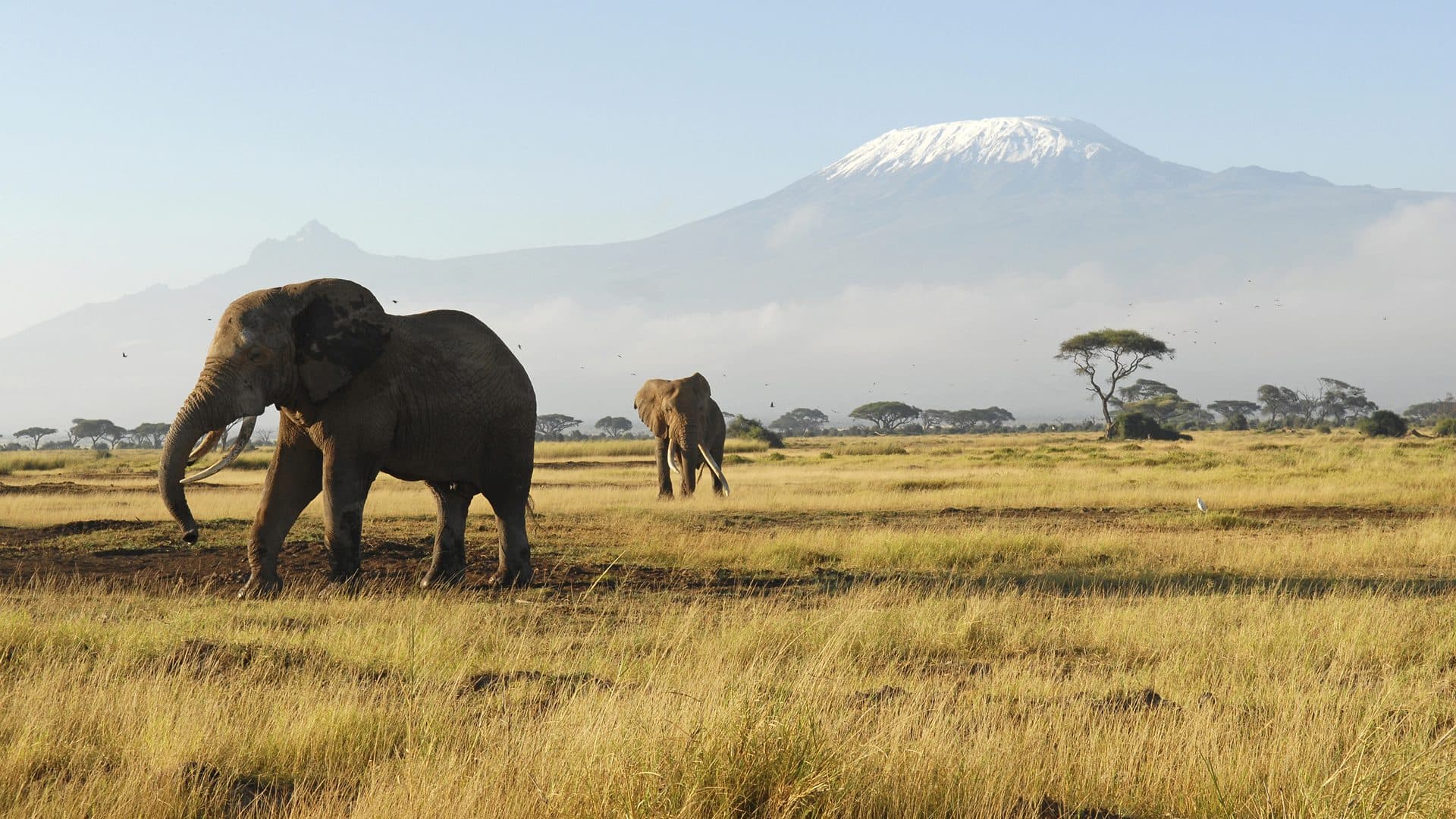
Kenya has Amboseli, which no Tanzanian park matches for large, relaxed elephant families beneath Kilimanjaro. It has the northern parks — Samburu, Ol Pejeta, the Laikipia conservancies — holding Grevy's zebra, reticulated giraffe, gerenuk and oryx that simply do not occur further south, plus the largest black rhino sanctuary in East Africa. And it has the conservancy model, which is the single best upgrade available to a photographer.
Tanzania has the Ngorongoro Crater, which has no equivalent anywhere. It holds the migration for most of the year rather than three months. It has Tarangire's baobab country and dry-season elephant concentrations. And it has Zanzibar an hour away by air, which makes safari-and-beach straightforward in a way Kenya's coast does not quite match.
The short answer
First safari, defined budget, limited days: Kenya. Sheer scale, the crater, and a beach to finish on: Tanzania. Ten days or more and the budget to match: do both — the cross-border routes in this catalogue exist because the combination is genuinely better than either alone, and the contrast between the two halves is part of the pleasure.